Curriculum
Writing
Curriculum intent, implementation, and impact
Intent
At Hadley Learning Community Primary School, we aspire for all children, from Nursery to Year 6, to develop a lifelong love of writing and the ability to express their thoughts, ideas, and emotions clearly and creatively through the written and spoken word. Writing is integral to every element of our curriculum with explicit and intrinsic links made to the teaching of oracy and reading. We aim to develop children’s ability to produce well-structured writing with appropriate detail, in which the meaning is clear and the interest of the reader is engaged. Our approach to writing aims to instil the importance of transcription and composition, through a broad and balanced curriculum as required in the National Curriculum.
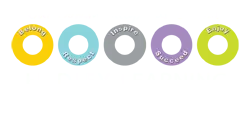
We foster a culture where pupils belong, with a strong sense of identity and inclusion within their learning community. From their earliest days in Nursery to their final year in Year 6, our pupils embark on a writing journey that immerses them in diverse genres and memorable contexts where they learn not only to write but also to articulate and refine their ideas through discussions, partner talk, drama, and collaborative opportunities such as ‘Think, pair, and share’ and peer assessment. We are committed to providing an inclusive environment where all pupils, regardless of their starting points, are supported to explore how grammar shapes and enhances both their writing and communication. This approach includes scaffolding, targeted interventions, both scheduled and responsive, and accessible resources to empower all pupils, including SEND and EAL learners, to fully participate and thrive.
We promote respect in our classrooms by valuing every child’s voice and their individual learning journey. Pupils learn how grammar shapes and enhances their writing with purposeful writing opportunities, ensuring they develop not only technical accuracy but also creativity, voice, and style. We ensure that writing is meaningful, engaging, and relevant. We want our pupils to enjoy the process of writing, embracing it as a creative and enjoyable activity that sparks their imagination and curiosity. We want our pupils to develop independence in being able to identify their own areas for improvement in their writing, through effective editing and proofreading during and after the writing process. We aim for all our pupils to succeed, gaining the skills, confidence, and passion needed to write for various audiences, purposes, and genres.
Our ambition is for every pupil to leave primary school equipped with the skills, confidence, and passion to write for a variety of audiences, purposes, and genres as they transition to secondary education and beyond. We also aim to inspire our pupils, motivating them to see the power of words and the impact they can have on the world around them.
Communication and Language
In the Foundation Stage, we aspire for all children to develop a strong foundation in communication and writing, where they feel confident, motivated, and excited to express themselves. We aim for children to become enthusiastic communicators, capable of engaging in meaningful conversations and using language to explore the world around them. Through hands-on experiences and a print-rich environment, we hope children will develop a love for writing, mastering key skills such as mark-making, letter formation, and phonics, and using writing as a tool for creative expression and real-world communication.
Implementation
The National Curriculum describes what must be taught in Key Stages 1 and 2 and at HLC all our learning objectives offer pupils a range of opportunities to write for different contexts, audiences and reasons. Our pupils have daily Writing lessons with a clear focus using the HLC Writing Cycle to develop their understanding and application of different genres. We link our writing to our topic and class text; making the learning meaningful and within a context. Teachers plan units of work from Long term plans into half termly medium term plans. In the Foundation Stage – Nursery and Reception – the curriculum is guided by the Early Years Foundation Stage Statutory Framework. Children are encouraged to apply their phonics learning through their play, to promote mark making, and the use of print within the environment and story scribing.
At the beginning of the week, we teach dedicated lessons for Grammar, Spelling and Punctuation which will feed into our writing to create a real pathway for learning. We organise our lessons progressively to enable pupils to recall prior knowledge, talk through their understanding, apply their new learning and evaluate. In Read for Write lessons, pupils are provided with models for writing and opportunities to acquire new vocabulary so that they can apply ideas gathered from their wider reading to their own writing. High-quality texts are used to develop vocabulary and identify language features while immersing children in a wide range of genres and topics across a bespoke broad and balanced curriculum.
Writing sequences are taught over a week allowing children to apply the knowledge of grammar and punctuation skills they have been taught, as well as developing their understanding of the different writing genres. In longer pieces of writing (such as narratives, recounts, explanation texts), sequences will take 2 weeks so that children can effectively research, plan and draft their work. They use a green pen to edit and proofread before they then publish their final draft. Pupils are taught how to edit and improve their own writing through conference marking, as well as being given opportunities to peer and self-assess their work by evaluating their writing targets which are accessible in their writing books. Discrete editing and proofreading lessons involve a range of strategies such as teacher modelling, use of WAGOLLS, partner talk and editing stations.
We think it is really important that the children are aware of their learning journey, so that they see the relevance of the lessons leading up to the end point. Working Walls are used in the classroom to support and motivate children with key vocabulary displayed, modelled examples of writing and language features for the genre being taught. Children are also encouraged to use, add to, and take pride in using the ambitious vocabulary on display. To build confidence and experience with writing beyond school, we seek other opportunities for children to write for enjoyment. Children attend an after school newspaper club; they can write articles of their choice or report on school news. Writing competitions such as ‘The Young Writers’ are promoted across KS1 & KS2 — winners have their work published in anthologies which is aspirational as it is shared by everyone. Writing is cross-curricular and opportunities to apply writing skills are planned for; explanations, reports, note taking and recording observations, author visits and theatre trips. Links between reading and writing are made explicit-we read as writers and we write as readers.
Spellings
Spellings are taught according to the rules and words contained in Appendix 1 of the English National Curriculum and the online platform, Spelling Frame. Children receive discrete weekly spelling lessons and are given tasks to apply what they have learnt alongside spelling investigations, ‘look-say-cover-write-check’ tables, games and puzzles. For many children, this approach to spelling rehearsal has been proved to be more engaging and leads to better retention.
Additionally, Spelling Frame is a website designed to help pupils revise the statutory spelling rules and lists in line with the guidance set out in the National Curriculum. Every child from Year 2 to Year 6 has been provided with a personal log-in for Spelling Frame. Once signed in, pupils can access a variety of games linked to their assigned spelling rule. Spelling Frame uses a ‘word attack’ method of revision, which encourages the children to notice patterns in syllables, as well as recognise the sounds and shapes of words.
We aim for our pupils to write clearly, accurately and coherently, adapting their language and style for a range of contexts, purposes and audiences. Role play and speaking and listening activities are also used alongside this, to promote pupils oracy skills and understanding. All staff teach handwriting lessons within daily lessons following the ‘Achieving Excellence in Handwriting’ programme.
Key Stage 1: Writing aims
Pupils are expected to develop basic writing skills and use them to communicate clearly. The key aims include:
Transcription:
Spelling: Children should be able to spell common words correctly and use phonics to spell unfamiliar words.
Handwriting: Children should form letters correctly and begin to write legibly with increasing control of letter size and spacing.
Composition:
Writing for Different Purposes: Children should write for a variety of purposes, including stories, descriptions, and simple explanations. They should be able to plan and discuss what they are going to write, before writing.
Sentence Structure: Children should use simple sentences and some more complex sentence structures, using punctuation such as full stops and capital letters correctly.
Grammar and Punctuation:
Grammar: Use simple punctuation marks, like full stops, capital letters, question marks, and exclamation marks.
Parts of Speech: Begin using basic grammar structures, such as nouns, verbs, and adjectives, to create meaning.
Key Stage 2: Writing aims
At Key Stage 2, students are expected to build on their earlier writing skills and develop greater fluency and control over their writing. The aims include:
Transcription:
Spelling: Pupils should spell words correctly, including those that are less common and subject-specific, and use spelling rules and patterns they have learned.
Handwriting: Write legibly, fluently, and with consistent use of size, shape, and spacing in handwriting.
Composition:
Writing for Different Purposes: Pupils should write in a range of genres, such as narratives, non-fiction texts, letters, and reports, adjusting their style and content to suit the purpose and audience.
Planning and Drafting: Pupils should plan their writing by discussing their ideas and using planning techniques. They should also be able to revise their work to improve clarity and coherence.
Organising Ideas: Organise writing logically, including the use of paragraphs, sequences, and cohesion.
Grammar and Punctuation:
Use of Grammar: Students should demonstrate a solid understanding of grammar, including verb tenses, nouns, adjectives, adverbs, prepositions, and conjunctions.
Punctuation: Use punctuation accurately, including commas, apostrophes, speech marks, colons, semi-colons, and dashes.
Handwriting and Presentation:
Continue developing fluency in handwriting, with attention to neatness and consistency.
Implementation of EYFS Curriculum
Communication and Language is promoted through a language rich environment in which adults narrate, ask questions, model thinking, provide a running commentary, repeat and extend language and give children reasons and a desire to talk. At the planning stage, new and ambitious vocabulary linked to the theme is identified and displayed within the environment in the form of words and sentences acting as visual prompts for adults and children. Within our school, adults actively seek and plan for opportunities to provoke talk. It is also taught through direct teaching e.g. daily group times, snack times and story and rhyme time. Investigation areas are used to display intriguing objects and pictures; children are encouraged to describe, discuss and ask questions about what they see. Enhancements are regularly added to all areas of the provision as a stimulus to inspire interest and engage children in talk e.g. setting up a scenario in the Role Play area such as a spaceship to encourage discussion and problem solving. Adults have a sound knowledge and deep understanding of how children learn to talk. They model the qualities of a good communicator and capitalise on opportunities to engage with children in conversation.
Writing
- Initially, children will begin to discriminate between the marks that they make. Children have opportunities to talk and ascribe meanings to marks supported by a systematic phonics programme.
- During the planning process, careful consideration is given to the next steps in learning and how children can rehearse and refine their writing skills.
- New and ambitious vocabulary we want children to learn and use is identified and displayed in the environment in the form of words and sentences.
- A mark making tool station is situated in each room of our provision offering a wide variety of mark making tools and materials.
- Vertical surfaces such as white boards and easels are also available indoors and outside
- Each area of the provision is equipped with relevant writing resources.
- We use sensory experiences to develop children’s confidence and enjoyment in early writing skills. We encourage them to mark make in positions where they feel most comfortable e.g. standing, lying down, sitting on the floor whilst they are developing their core stability.
- Adults have a sound knowledge and deep understanding of child development and they recognise the strong links between physical and communication skills and emerging writers. Within the environment adults actively encourage children to practise and develop gross and fine motor skills and oral communication in readiness for writing.
- By modelling, suggesting and encouraging they promote ways in which children can record their ideas in different ways.
Impact
By the end of their journey through early years, our children will use their phonic knowledge to write words in ways which match their spoken sounds. They will begin to write simple sentences which can be read by themselves, and are phonetically plausible. We ensure that children are immersed in different genres of books promoting an enjoyment of reading, extending their vocabulary and cultivating their imagination.
- Draw on a rich store of language in my writing
- Hold a sentence in my head
- Control and manipulate a writing tool
- Use imaginative ideas in my writing
- Write words and tell others what is written
- Use a tripod grip
- Use and talk about the features of different writing
From the regular monitoring of books, lesson studies, learning walks and pupil voice, it is clear that writing is taught in a progressive way, that prior teaching and learning is considered, and that learning is memorable. Children enjoy talking about their writing – about its construction, purpose and effect on the reader. They are confident to share their writing with staff, their peers and parents. As a result of the explicit teaching of writing skills, children achieve well at the end of both Key stages and leave HLC with a secure understanding of writing and are well prepared to meet the needs of a challenging secondary curriculum and the expectations of writing across all subjects.
To measure the impact of our writing provision, we complete regular monitoring and assessment which will include: termly pupil progress meetings, INSIGHT data tracking, baseline writing assessments at the beginning of each year, moderation meetings, weekly spelling tests, termly NFER spelling and grammar tests.
All teachers complete high-quality formative assessment and independent pieces of writing are levelled against our assessment documents for each year group. At the end of each year, we expect pupils to achieve age related expectations for their year group. Some pupils will have progressed further and achieved greater depth standard. Pupils with special educational needs and those with gaps in their understanding receive appropriate support and intervention in follow up lessons. This information is shared with children and parents three times per academic year. The Writing lead and Headteacher ensure that standards remain consistently high and to identify areas for ongoing CPD.
